RF lifting
Alltight Pain: How Much Does It Actually Hurt? Myths and Facts Explained
Registration Date
Blog Summary
Is All-Tight pain really that severe? Gangnam Onlif Clinic has calmly laid out the principles of RF/HIFU lifting pain, management methods, and even the warning signs that mean you should go to the hospital immediately.
Blog Table of Contents
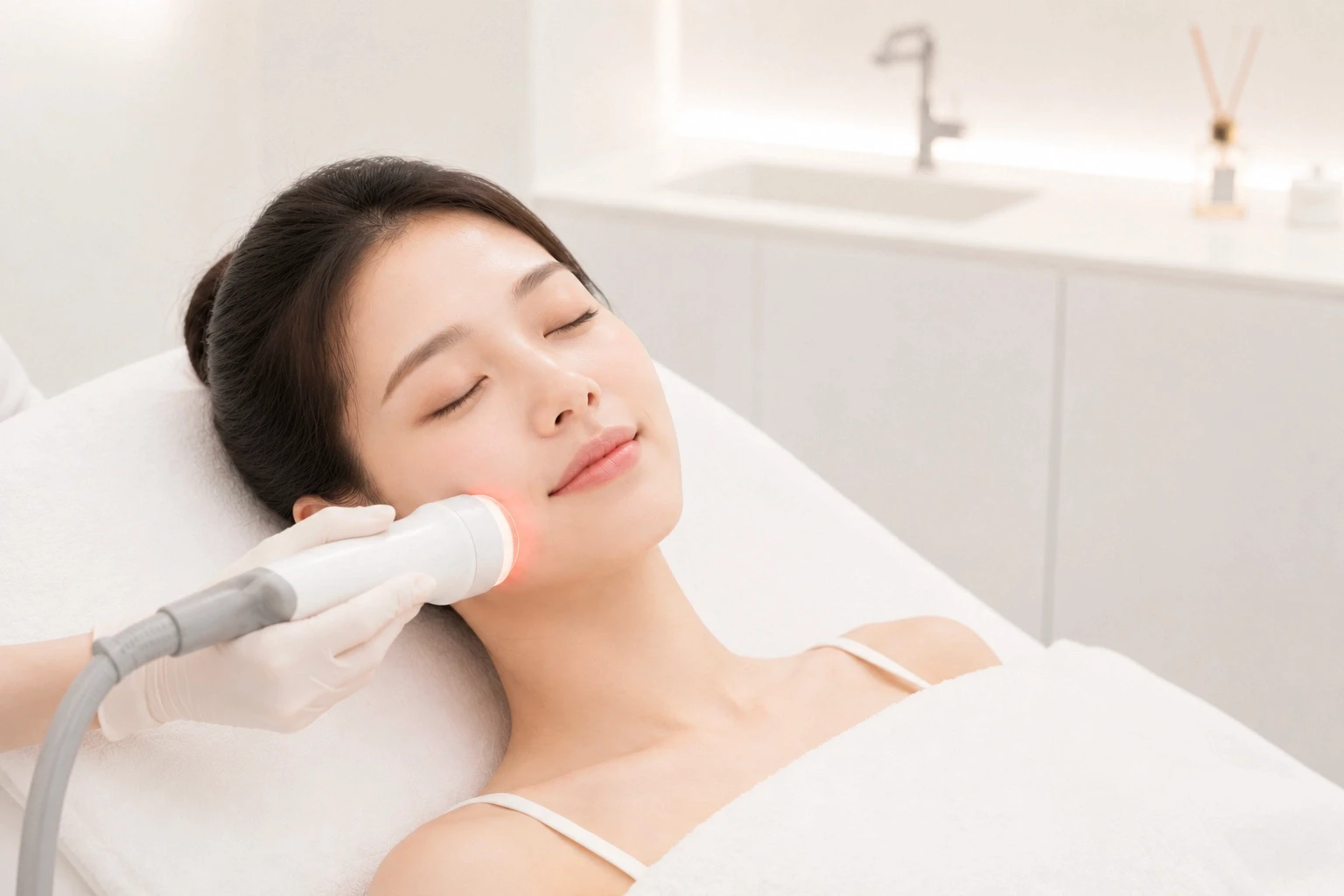
Many of those searching for "All Tight pain" are curious about how painful the lifting procedure is. To give you the conclusion first, Onlif Clinic's All Tight Lifting belongs to the category of procedures with almost no pain. Since it delivers radiofrequency (RF) energy to the deep layers of the skin, most people only feel a warm heat or a slight tingling sensation during the procedure, and even that sensation is significantly suppressed with numbing cream and cooling.
This article summarizes why it hurts, how much it hurts, and how to manage it, focusing on All Tight Lifting pain.
🔍 All Tight pain, why does it occur?
All Tight Lifting is a tightening and lifting procedure that induces collagen regeneration by precisely targeting radiofrequency (RF) energy to the dermis and SMAS layer using Deep Localized Thermal Delivery (DLTD) technology. It focuses on naturally restoring the balance of the facial line disrupted by sagging and aging.
The pain felt here is mostly a physiological signal that 'heat is actually being delivered to the tissue.' In other words, rather than a bad signal, it is closer to evidence that the energy is working on the intended layer.
The nature of the pain varies slightly depending on the energy method.
Radiofrequency (RF) Lifting: Mainly warmth warming up from the surface, tingling
HIFU (High-Intensity Focused Ultrasound): A sensation like pricking the deep layers, sometimes a tingling sensation like bone vibration
Thread Lift: When performed as a combined procedure, pulling or discomfort when chewing may be added
When treating the jawline or around the cheeks, the periodontal ligament may receive compressive stimulation, causing the teeth to feel slightly sensitive or tingle. This is usually temporary.
📌 Key Summary: Pain is the result of thermal energy delivery and inflammatory recovery response, and is divided into heat, tingling, and pulling depending on the procedure method.
📊 How painful is it? All Tight pain intensity comparison
In clinical practice, the NRS/VAS pain scale, which rates pain from 0 to 10 points, is used. The approximate range for each type of procedure is summarized as follows.
Procedure Type | Pain (NRS) | Recovery-related Characteristics |
|---|---|---|
Non-invasive Radiofrequency (RF) | About 2–6 points | Heat, redness immediately after the procedure |
HIFU | About 4–8 points | Tenderness when touched can last 2–7 days |
Invasive RF/Laser | Reduced with anesthesia | Bruising and swelling can last for 1–2 weeks or more |
Onlif's All Tight Lifting is a non-invasive radiofrequency category, corresponding to the low-pain section in the table above. Most are comfortably performed with only numbing cream and cooling, and tenderness when touched after the procedure often subsides within a few days.
📌 Key Summary: Non-invasive radiofrequency All Tight is at the level of NRS 2–6 points, which has a lower pain burden than HIFU or invasive procedures.
💉 How is anesthesia administered?
Non-invasive procedures usually apply numbing cream to the treatment area to dull the surface sensation. This alone is enough to reduce most of the heat sensation to a fully tolerable level.
However, applying too much numbing cream is not recommended. Leaving it on a large area for a long time carries risks of skin irritation, allergies, and rarely, systemic side effects, so it must be used in an appropriate amount under medical supervision.
If the procedure is highly invasive, local anesthesia may be combined, and if you are particularly sensitive to pain, whether to use sleep anesthesia can be discussed during consultation. The pain experience varies quite significantly depending on the anesthesia method.
📌 Key Summary: Non-invasive All Tight is often sufficient with numbing cream, and the anesthesia method is determined through consultation according to individual sensitivity.
⚖️ Is it true that 'the more it hurts, the better the effect'?
No. Pain intensity and procedure effect are not proportional. This is a misconception that various sources commonly refute.
On the contrary, in the field of orthodontics, there are discussions that excessive force increases the risk of root resorption, and even in lifting, excessive stimulation can lead to burns or delayed recovery. The goal is not to 'bear it unconditionally,' but to properly deliver the necessary energy and manage the pain.
Whether you can produce effects while minimizing pain ultimately depends on the skill of the practitioner and the equipment settings. This is also why Onlif has a doctor specialization system. Since one doctor cannot do everything well, we ensure both safety and comfort with a structure where doctors only handle the procedures they do best.
📌 Key Summary: It is not that the more painful, the better, but that delivering appropriate energy comfortably is the standard of a good procedure.
🚨 Go to the clinic immediately if you experience this kind of pain
Most sensations after the procedure are a natural recovery process. However, the signals below are hard to see as normal reactions.
Pain that worsens as time goes on
Skin discoloration, blisters, signs of burns
Sensory abnormalities (numbness, paralysis sensation persists)
Swelling or hard nodules that do not subside
These symptoms may be related to issues such as burns, nerve irritation, and fat necrosis, so you must immediately inform the clinic where you received the procedure and seek medical attention. Do not just endure it.
📌 Key Summary: Worsening pain, blisters, sensory abnormalities, and persistent swelling are not normal reactions, so immediate expert consultation is required.
💊 Post-procedure Painkillers and Lifestyle Management
If you are concerned about pain, the acetaminophen class is relatively commonly used. Since there are discussions that NSAIDs (anti-inflammatory painkillers) can theoretically affect the tissue remodeling process, it is safe to check with your medical team before taking them.
It is best to avoid saunas, intense massages, and excessive heat stimulation for a few days immediately after the procedure. This gives the redness and tenderness time to naturally subside.
If you feel stiff and extensively sore throughout your body for a long time after the procedure, you should differentiate it from chronic pain such as myofascial pain syndrome or fibromyalgia, which is separate from procedure pain. For reference, fibromyalgia has a global prevalence of about 2–4% and is common in women in their 30s to 50s, and myofascial pain syndrome is common enough that most people experience it at least once in their lifetime. In such cases, separate treatment, such as at a pain clinic, may be necessary.
📌 Key Summary: Acetaminophen is fine for painkillers, avoid heat stimulation, and differentiate widespread chronic pain separately.
🌿 The Direction Suggested by Onlif
Onlif Clinic does not focus on plastic surgery that changes the shape of the eyes, nose, and mouth, but concentrates on non-surgical skin procedures that lift away aging and sagging that hide your inherent beauty. We do not deal with incisional surgeries that involve a knife.
If you are concerned about skin elasticity and lifting, we primarily suggest a direction of improving naturally and without excess, centering on All Tight Lifting and combining HIFU, thread lifts, skin boosters, etc., as needed. It is exactly the same as our philosophy, "Because you are precious, we do not change you."
However, pain sensitivity, skin condition, and procedure areas vary from person to person. Accurate judgment ultimately requires a face-to-face diagnosis.
📌 Key Summary: Onlif naturally improves elasticity through non-surgical skin procedures and primarily suggests All Tight Lifting, which has low pain.
❓ Frequently Asked Questions (FAQ)
Is the All Tight procedure very painful?
All Tight Lifting, which is a non-invasive radiofrequency category, has a relatively low level of pain, around 2 to 6 points on the NRS scale. Most procedures are carried out comfortably with numbing cream and cooling, with many experiencing only a warm sensation or a light prickling sensation.
Does it have to hurt a lot to have a good effect?
No. Pain intensity and procedure effect are not proportional. Rather, excessive stimulation can increase the risk of burns or delayed recovery, so it is more important to deliver the appropriate energy comfortably.
Which hurts more, HIFU or radiofrequency?
Generally, HIFU (about 4–8 points) stimulates deeper layers, so the tingling sensation is stronger, while non-invasive radiofrequency (about 2–6 points) centers on heat, resulting in lower pain. However, there are individual differences depending on sensitivity.
What kind of pain after the procedure warrants a visit to the clinic?
Pain that worsens over time, blisters, skin discoloration, persistent sensory abnormalities, and swelling or nodules that do not subside are not normal reactions. In these cases, contact the clinic where you received the treatment immediately for medical attention.
Can I take painkillers after the procedure?
The acetaminophen class is relatively commonly used. However, because there are discussions that NSAIDs can affect tissue recovery, it is safe to check with your medical team before taking them.
I am afraid of pain. Is sleep anesthesia possible?
Depending on the type of procedure and individual sensitivity, local anesthesia or sleep anesthesia can be discussed during consultation. Non-invasive All Tight is often sufficient with just numbing cream.
All Tight pain, good things to check before choosing a clinic
Even for the same procedure, the results and recovery process vary depending on where, by whom, and how it is performed.
Asking the following items directly during consultation will help you make a decision.
Is it a place that performs that procedure frequently? — Each clinic has different procedures they specialize in. Check if it is a place that regularly conducts All Tight pain procedures.
Can you check the products and equipment used? — Ask during the consultation if you can verify the product name and whether it is genuine (whether it is an import-approved product and if there is an opening verification process).
Do they explain the breakdown of costs? — Rather than just hearing the total amount, you need to hear an explanation of what product is used, how much, and on what area to make a judgment.
Do they design looking at the entire face? — Even for the same procedure, the location and amount of treatment differ depending on face shape, skin condition, and left-right asymmetry.
Do they explain adverse reactions and the recovery process first? — It is better to judge a place that informs you of possible adverse reactions and how to cope with them rather than a consultation that only talks about expected changes.
Is there a way to check after the procedure? — Check if the time to check progress, how to contact them if there is a problem, and the standard for re-visiting are set.
Onlif Clinic handles All Tight pain like this
We divide responsibilities — With the thought that one doctor does not handle all procedures, Onlif divides medical treatments with doctors in charge of each field.
We check products and equipment together during consultation — We guide you through the products used and the opening verification process during the consultation.
Costs are guided along with the composition after diagnosis — Since the area, volume, and scope differ for each person, we explain together what costs how much.
We design looking at the overall facial balance — We view the face through three axes: texture, balance, and signals of youth, and make plans in a direction of tidying up the parts that obscure your natural expression rather than changing your shape.
We tell you about adverse reactions and the recovery process first — Along with the expected changes, we guide you through individual differences, possible adverse reactions, and countermeasures before the procedure.
We look at the progress together after the procedure — If verification is needed during the recovery period, we will guide you on re-visiting and contact routes.
If you are contemplating All Tight pain, it is best to first check what is possible and what is difficult in your current state.
An accurate diagnosis and treatment plan can only be determined through face-to-face medical treatment. Check through consultation at Gangnam Onlif Clinic.
Main Line
1588-8171
Directions
2, 4, 5F Montessori Building, 399 Gangnam-daero, Seocho-gu, Seoul
(Gangnam Station, Subway Line 2/Shinbundang Line, Exit 9, 10)